Introducing the Total Gym and ELEVATE Jump Trainer

Take Your Fitness to New Heights with Plyometric Jump Training!

Are you looking to elevate your fitness routine and unleash your full athletic potential? Look no further than the revolutionary Total Gym Jump Trainer! Designed to cater to all age groups, this cutting-edge fitness equipment will take your workouts to new heights with the power of plyometric jump training.

The Total Gym Jump Trainer is not just any ordinary fitness machine – it’s a game-changer that will transform the way you exercise. Plyometric training, often referred to as “jump training,” is a dynamic and high-intensity workout technique that involves explosive movements to build strength, agility, and overall athleticism. With the Jump Trainer, you can easily incorporate plyometric exercises into your fitness regimen, unleashing a multitude of benefits for everyone from beginners to seasoned athletes.

Here are some of the incredible advantages of incorporating plyometric jump training into your routine:

  1. Boost Explosive Power: Plyometric exercises engage the fast-twitch muscle fibers, enhancing your ability to produce maximum force in minimal time. This leads to explosive power, making it an ideal training method for athletes involved in sports like basketball, soccer, volleyball, and track and field.
  2. Improve Cardiovascular Health: Jump training is a high-intensity workout that gets your heart pumping and blood flowing. As a result, it improves cardiovascular endurance, promoting a healthier heart and overall well-being.
  3. Burn Calories and Fat: If you’re looking to shed those extra pounds and tone your body, plyometric training can be your best friend. It’s a highly effective calorie burner, helping you achieve your fitness goals in less time.
  4. Enhance Coordination and Balance: By practicing plyometric exercises regularly, you’ll improve your neuromuscular coordination and balance. This not only benefits athletes but also helps older adults prevent falls and maintain independence.
  5. Joint-Friendly: Unlike traditional high-impact exercises, the Total Gym Jump Trainer minimizes stress on your joints, making it a safe and effective option for all ages.
  6. Versatility: The Total Gym Jump Trainer offers a wide range of exercises, from basic jumps to advanced plyometric variations. It’s suitable for everyone, regardless of fitness level or age, and can be easily adjusted to challenge or support individual needs.
  7. Fun and Engaging: Jump training is a dynamic and fun way to work out, keeping you motivated and excited about your fitness journey. Say goodbye to monotonous workouts, and hello to an enjoyable exercise routine!

Join the fitness revolution with the Total Gym Jump Trainer and experience the incredible benefits of plyometric jump training. Whether you’re an athlete looking to boost performance, a fitness enthusiast craving a new challenge, or a senior seeking to maintain an active lifestyle, this versatile equipment has something to offer you.

Don’t wait any longer to take your fitness to new heights! Embrace the power of plyometric training with the Total Gym Jump Trainer and elevate your workouts like never before. Experience the transformation in your body, mind, and overall athletic prowess. Act now and unleash the true potential within you!

Written by Greg Doherty CEO and Director of HQH Fitness.

FLY INTO 2021

Yes, it’s been harder to train alone and while at home! I found it difficult to get started, stay committed, and find motivation or people to train with.

Even as a fitness coach, I’ve gone through resetting dilemmas and being motivated to hit my health and fitness goals for The year. Especially when I’ve had to start trading myself and Clients from home. As we look outside the box and incorporate every day life and fitness as a whole. I would love to share our top five at home work out tips! And a plan of attack for 2021 that myself and the team of expert coaches have found can get anyone motivated during this Covid roller-coaster ride.

Our TOP TIPS to WORKOUT from HOME

  1. ACCOUNTABILITY

Without someone or a group to keep you accountable, training in 2021 can be difficult to stay consistent. I know personally, I hate to not show up if you know people are waiting for you. Therefore, this week, it’s time to ask your partner, contact a friend or family member and see if they will start training with you so you can check in on each other. We run zoom or FaceTime workouts that either shows the people training or have regular chickens at the end of the two rounds, throughout the session where you can see everyone going hard and assists you and going hard in the workout as well.

  • HOME WORKOUT EQUIPMENT

Having equipment at home is key to keeping your workouts fun and consistent no matter what’s going on around you.

Below I have included a list of my favourite at home exercise equipment to keep things more interesting.

  • Ropes used for battle ropes or stretching,
  • Bungee cords – for resistance bands,
  • A wood ply box or large step – for box jumps,
  • Make a sandbag or slam ball,
  • A ladder on the ground using tape.

Multipurpose equipment that I love using:

  • Total Gym Home user model or Total Gym Encompass for the ultimate home workout.’
  • Total Gym Row Trainer
  • Total Gym Core Trainer

Purchasing new workout clothes can also be motivating for the New Year I like to encourage my clients to get a new pair of running shoes that they look forward to putting on in the morning!

  • TRAIN IN THE MORNING

I highly recommend training in the mornings to avoid getting unmotivated or busy later in the day and find an excuse not to train. Exercise doesn’t just make you feel good about your body, but your mindset as well plus will set up your day with a healthy morning routine which is key.

Training in the morning insures that you get the workout done that day and starts your day off right, both physically and mentally. When you exercise, your body releases chemicals such as dopamine and endorphins in your brain that make you feel happy. Not only is your brain dumping out feel good chemicals, but exercise also helps your brain get rid of chemicals that make you feel stressed and anxious.

When I find my clients having difficulty getting out of bed in the morning I remind them of their way, and why they got started in the first place. I’ll have them grab their belly fat of their goal is weight loss for example and then have them use the Mel Robbins five second rule and countdown from five in the head and once I get to zero to spring up out of bed as hard as it seems on some days using these tools will assist you in taking action.

  • TRACK WEEKLY RESULTS

We all require results to keep our motivation going, I know if I’m not tracking my fitness goals I become quickly unmotivated.

I always remind myself that I will be seeing everyone after lockdown and when we can get out and larger group settings, and just like if I was getting married, I want to be looking and feeling my best when I’m able to see everyone. By keeping track of your results weekly, you’ll be able to see how actually putting in the work is assisting you in reaching your goals.

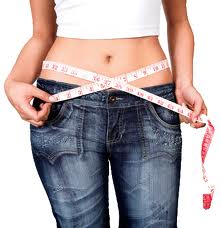
We love the three ways to keep track that are simple and easy each week you take pictures, weigh yourself and do girth measurements. If your tech savvy, implement a goal of 10,000 steps a day or start keeping track of your daily calorie intake and hold yourself accountable throughout the week.

  • MEAL PREP

Meal prepping and cooking healthy has never been so pertinent that eating out becomes more difficult. This allows us to work on our weight loss goals which are 80% of the journey our diet and only 20% is exercise. Having the ability to make more meals at home and look deeper at the number of calories you’re having a day allows you to have an awareness of what you’re putting in your body. There are thousands of recipes that are accessible and healthy, the trick I found is cooking at myself, I can keep track of the quantity and quality of food I’m putting in my body much easier, which has allowed myself and our clients to see results quickly and therefore stay motivated.

I know that getting started can be difficult, but implementing these five easy steps will insure you hit your health and fitness goals this year, regardless of the changing climate around us. We are all one and in this together!

About Meghan Jarvis

A former World Class BMX bicycle racer, Meghan came to Australia to play professional basketball and ended up staying as a lead lecturer at the Australian Institute of Fitness. She most recently appeared as a ‘Ninja’ on Channel Nine’s Australian Ninja Warrior. Meghan’s passion for fitness and entrepreneurialism led her to found WellCorp Health and Wellness and Buzvil a global health and fitness app. She believes strongly in the importance of re-defining and bridging the gap between physical health and mental health. She is also the Total Gym Business Development Office, Precor and Altitude Training National Master Coach, making her an authority on fitness equipment, technology, peak performance and an international speaker. Her experiences as an athlete, educational portfolio (Sports Scientist, Kinesiologist and Masters of Coaching), entrepreneurial ventures, and enthusiastic character have shaped her as a formidable leader in fitness and an international speaker.

How Total Gym Helped my Crossfit Competition

Friday 12pm.

Here I am, about to embark on a new adventure and I have to admit that I am nervous. It has been a very long time since I have actually competed in a sporting arena, especially as an individual or in this case a pair.
Whilst watching the athletes arrive to register for the event, I find myself scanning the crowd of active wear attired, stern visaged participants, trying to pick out my competition. Is that rather imposing, heavily tattooed gentleman competing in the same category as me or is he, hopefully, part of the younger, elite competition? What about Continue reading

Why is Circuit Training Great for Your Gym?

Why is Circuit Training Great for Your Gym?

Bridging the Gap Between Selectorised Equipment and Functional Cages.

In a market where, since 2008, gyms are competing for the attention of 41 million American health club members, every gym owner needs to understand how to attract new members. Why do people go to the gym instead of working out at home and how do you keep them once they walk in the gym doors?


Total Gym Elevate Circuit

Read more…


BOSU – Balance for Tennis Performance

Gallery

This gallery contains 3 photos.

Written by Douglas S. Brooks, MS & Peter Twist, MSc The systems, strategies and tactics in tennis are best described as organized chaos. During a match, no competitor – even those with great on-court intuition – knows exactly what will … Continue reading

FIT JOINTS Series #2:

by Dr. Theresa Dobson.

PART TWO OF THE “FIT JOINTS” SERIES

Introduction: Take Me to the River.

You wouldn’t typically think of your body as a river, though you probably should!

Your human vessel is composed of 70-80% water.

Every cellular function awaits the arrival of this liquid gold to perform the alchemy of generating life, energy and repairs that you body requires to stay alive.

Millions of chemical reactions occur every minute that require water. The joints of your body depend on water so blood can deliver much needed nutrients and escort ugly toxins and waste away.

Decreased water supply to your body is particularly vicious to your joints due to the fact that if toxins are milling around your organ system and there is not enough water to transport them to your bladder via the kidney, your body will use your joints as a garbage can for these toxins, thus detouring them away from your vital organs. This trade-off seems such a logical and smart compromise, but comes at a high cost.

Toxins stored in joints cause early degeneration with pain and breakdown close behind. Your luscious clear river has now become a swamp… Yikes!!

Hydration is one of the easiest economical ways to acquire healthy joints and a happy body overall. Grab that liquid gold and hydrate, hydrate, hydrate!

Each of you require different amounts of water based on how many cells you have, so here is an easy formula to know the right daily amount for you:

Take your body weight in kilos and multiply by .033, this is your personal perfect water intake amount.

Joint of the Month: Your Precious Knees

The largest joint in your body is the knee.

Classified as a hinge joint, your knee is the meeting point for your shin (tibia and fibula) and your upper leg (femur) which are all joined together via a barrage of ligaments to secure this precious joint.

Without this joint we could be walking on stilt legs (very unattractive), and most sports as we know them would be impossible!

The function and health of this joint is dependent on the balance of the pulleys and levers (muscles/tendons) that attach to it.

For instance, weak hamstrings and strong quads create excessive load to the ACL (anterior cruciate ligament): the most commonly injured ligament in the knee.

Balanced muscles, healthy ligaments and good posture are critical to this joint. So get yourself assessed via a length / tension assessment by a qualified professional, physiotherapist or CHEK practitioner.

Fact:

The knee is also the most complicated joint in your body! As it is a pivotal hinge joint that allows flexion (bending), extension (straightening) and small amounts of rotation, it is a ligament-filled joint. Those of you who have endured knee injuries and surgeries know these three lettered ligaments well: ACL, PCL, MCL and LCL. Injury to this joint is the reason most people visit orthopaedic physicians. It is also the joint most vulnerable to acute injury and osteoarthritis with the ACL is the most commonly injured ligament.

On Bended Knee

Most of our available leg movements and virtually all sports activities are dependent on your knees. They also support the whole upper body – so many thanks required!

Because your knees are in such high demand, they are also subject to a variety of injuries. In fact, knees keep most orthopaedic surgeons as busy as bees. Unfortunately many knee pre- or post-injuries are not rehabilitated properly and leave many people with the inability to fully extend (straighten) or flex (bend) your knees. This can not only be very frustrating but also compromises the rest of the body which has to compensate for your weakened knee.

Bless rather than curse your knees and prepare them for the demands you ask of them!

Because your knees are composed of ligaments not muscles, you must train and prepare them quite differently. The flat surfaces of our contemporary lifestyles provide no challenge to these ligaments and they become weak and prone to injury.

The knee should be trained in multiple movement patterns with slow held motions to excite and engage the ligaments, otherwise they can become unstable.

This joint is seriously challenged if your sport involves quick stopping or starting, changing directions or repetitive impact such as running, rugby, soccer netball, basketball, skiing, tennis or squash to name a few.

Individuals with flexible joints and hyperextension tendencies are especially vulnerable to knee problems so seek professional advise before engaging in a sporting activity.

Key Points to Remember:

  • Hydrate, hydrate, hydrate.
  • Train and rehabilitate to address the ligaments not just the muscles.
  • Seek professional advise and have a length tension assessment.
  • Get your spine checked to ensure postural imbalances are addressed.
  • Visit my webpage for more information or inquiries: http://www.activecare.co.nz

Fusion:

Create your perfect sporting moment…where your body, mind and soul smile. Breath into that moment and feel the magic. Then do it again… and again!

Next month’s FIT JOINT Series article will focus on the Foot-Ankle.

Dr. Theresa Dobson

Doctor of Chiropractric, Neck Specialist, Neuromuscular Therapist, Biokinetics Practitioner, CHEK Holistic Lifestyle Coach Level II, Sports-Specific Practitioner and Seminar Presenter, Dr. Theresa Dobson has a long-standing rep utation as a highly experienced and knowledgeable practitioner. With two clinics located in Auckland and on the North Shore, Theresa works with a wide spectrum of patients such as professional rugby players, boxers, surfers, yachtsmen, cyclists, motor racers, soccer players, as well as recreational sportsmen and women of all age groups. Theresa is currently setting up a new business, guiding people through the “Dos and Don’ts” of surgery, offering programs and seminars to advise patients how to manage their pain effectively.
www.activecare.co.nz         www.stitchedup.co.nz
Theresa Dobson welcomes your emails at info@activecare.co.nz

It’s Not About the Weight

By Josh Smith.

It’s not about the weight. It never has been.

And frankly, I’m sick and tired of the poor education that gets peddled in the media, in the stores, and by other so-called ‘health professionals’ (Yes thats YOU – dieticians, nutritionists, personal trainers, exercise physiologists, doctors, physiotherapists and anybody else peddling ‘weight loss’). It’s not about the weight.

Yes, some people must lose ‘a percentage of their body mass’ and sometimes a LOT of their body mass, before we can consider them healthy. But lets take a look at this for a second…

What are these people actually doing?

If they are doing things correctly, achieving ‘health’ how health should be achieved – they are bringing their body back towards homeostasis*.

They are taking their body from a toxic, stressed state to a size and shape that is normal for them, through the application of correct nutrition, training and lifestyle modifications.

This ‘normal size‘ is different for each and every person.

It is geneticially imprinted into each of your cells upon birth, and is innately linked to the ‘primal being’ inside you, and not some misinformed, misguided and mistaken pseudo-YOU that you develop through other people’s perceptions and beliefs.

Sometimes you must gain ‘weight’ to be healthy, but this does not mean you are fat. Quite the opposite.

If you are healthy, your muscles are dense. Your blood flows correctly. Your body is quite literally a fat burning machine, using that fat as fuel to feed your ever-thirsty, lean muscle mass.

So what is it we should be focusing on?

  • Body fat loss
  • Energy levels
  • Digestive ability
  • Taste sensation
  • Lean muscle mass
  • Bone density

All of these things can be measured, whether qualitatively or quantitatively, and give us a much better definition of whether we are ‘healthy’ than weight loss alone could ever give us.

So what is a healthy look?

In my own personal opinion, health looks like muscle mass. Health looks like clean skin. Health means sparkling eyes, reduced body odour, and a positively energised aura.

This doesn’t come with ‘weight loss’. This comes with a complete transition of your thinking, and comes from an understanding that a fading person is not necessarily a healthy person.

Healthy people can lift things.

Healthy people can move in all three planes of motion, under unstable loading parameters (gravity, instability), WITHOUT restriction.

Healthy people have ENERGY. They GLOW. They can digest GOOD FOOD.

Healthy people don’t look for energy drinks, protein supplements, schmancy machines or substandard training regimes.

Healthy people understand their BODY, know what their body WANTS, and then GIVE IN TO IT.

So don’t think ‘weight loss’. Think ENERGY. Think MINIMISE BODY FAT. Think FUNCTION.

Think HEALTH.

And for goodness sake – DON’T sit around moping when your Lite ‘n’ Easy diet, machine-based training regime and energy drink consuming lifestyle makes you THIN and SICK.

*Homeostasis is a state whereby the bodies’ systems are working in synergy, Yin and Yang, and that the balance of the sympathetic and parasympathetic branches of the nervous system are functioning optimally. What this means is that body fat loss is maximised, circadian rhythms flow naturally, and all muscles, organs and body systems are supplied with the right amounts of blood at the right times for repair and function, amongst other things.

It is within you.

Josh Smith
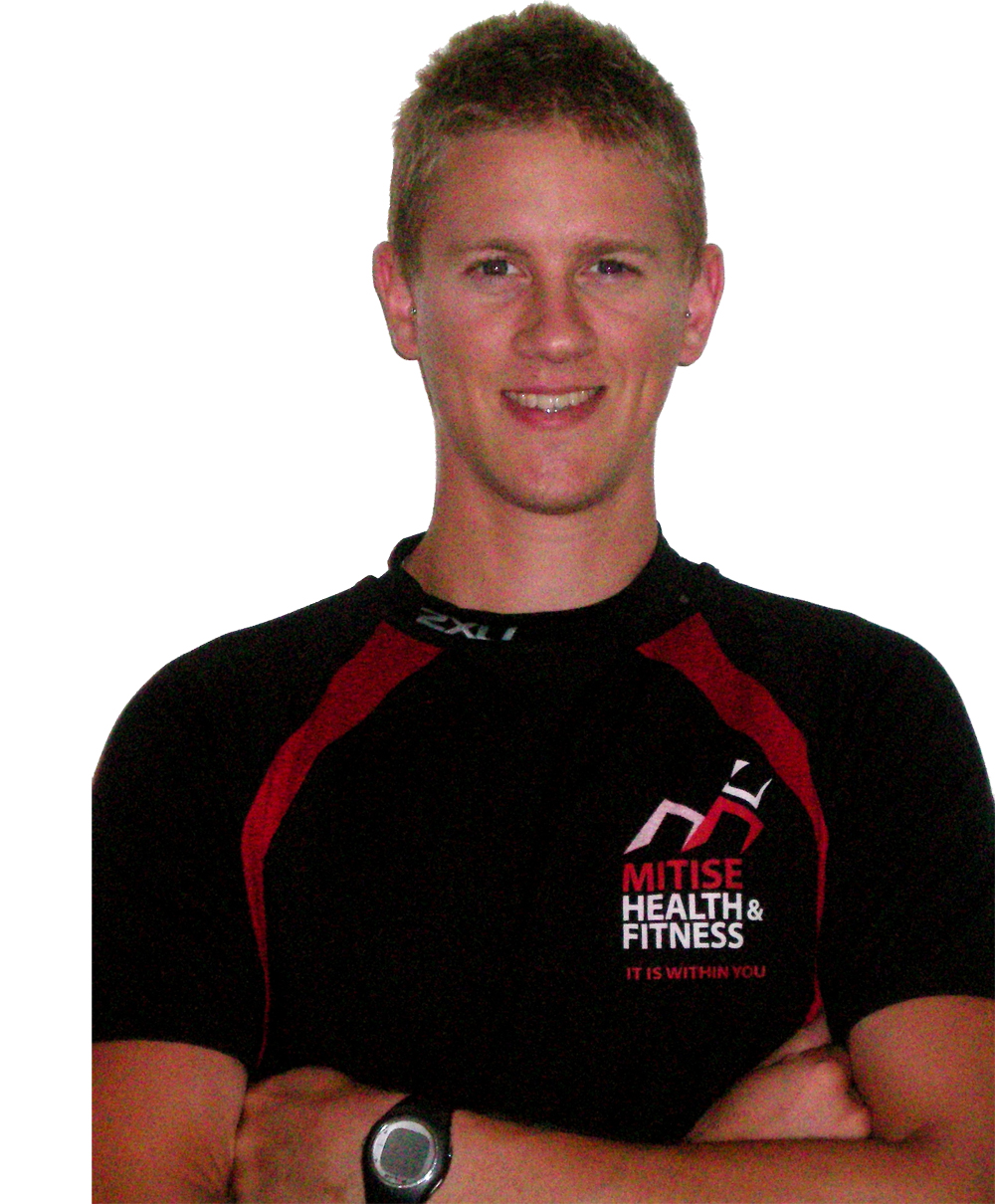
Josh is the Director of Mitise Health & Fitness, offering Personal Training, Nutritional Guidance, Lifestyle Coaching, Personal Development, Corporate Seminars, BootCamps and Boxing Groups. Josh is a qualified CHEK Exercise Coach, CHEK Holistic Lifestyle Coach Level 1 and GRAVITYPersonalTrainer, along with various other qualifications and trainings, and is a very inspirational individual. Mitise (pronounced my-ties) is a word invented by Josh and actually stands for “It is within/in Me“. Check out the spelling of Mitise and you’ll see the connection. Clever huh!

www.mitisehealth.com
twitter.com/MitiseHealth

FIT JOINTS Series #1: Atlas “The Master Control Centre”

Introducing a new contributor to the HQH Fitness blog – Dr. Theresa Dobson.

PART ONE OF THE “FIT JOINTS” SERIES

Introduction

Let’s have a look under your skin. OOOUCH!!!

No doubt you have spoken that profound word (amongst others) when you have engaged in the journey of a joint injury. Most of us have and this is not surprising considering life in the 2011’s requires most of us to be endurance athletes in and out of our work environment:

We wake to an alarm, toes to carpet and we’re off rushing in to the new day.

Combine that with the fact that most sports, jobs and hobbies (both recreational and professional) require that we use our bodies in very imbalanced and repetitive movement patterns…and our bodies will be sure to remind us of it at the end of each day!

Years of experience as a Chiropractor, Sports Practitioner, and having the delightful challenge of working with professional athletes, coaches and trainers in the full spectrum of sports has taught me that most joint injuries occur within a very small range within the joint – generally when a joint is taken past its normal end range of motion to the minute amount of 0-4 degrees.

Indeed this sounds quite ridiculous!

However, when you understand the intimate relationship of the body’s “playful threesome”:

Tendons + Ligaments + Muscle

which make up the basic foundation for joint movement, you too will become intrigued at the intimacy of this relationship.

So…lets take a peak beneath our skin!
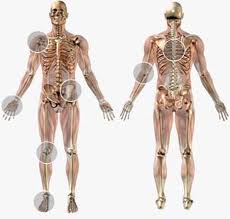
FACT: There are 206 bones in the human body (note that this number will vary slightly for those special genetic off throws). In order for these eager bones to move and perform for us, they require the assistance of the “playful threesome”.  This threesome literally become the pulley and lever system for the bones. Quite honestly it is like a game of puppetry. Without this pulley and lever system we wouldn’t be much more mobile or interesting than a sea slug!

Here is a user friendly version of the threesome:

  • Ligaments are strong fibres (like thick fishing lines) binding bone to bone, allowing and limiting motion and providing attachment sites for muscle tendons.
  • Tendons are fibrous tissue (again like fishing lines) connecting muscles to bones.
  • Muscles are tissue made up of contractile fibres ( like elastic bands) that effect and create movement of bones.

So in short, as the muscle contracts, it shortens. With support of the tendon attachment to the bone it levers the bones in different directions depending on the joint type and shape. Ligaments secure, protect and hold bones together. This “threesome” allow our body’s the joy of movement!

So to keep a joint fit and healthy, we must keep it within the range of motion dictated by the joint shape and function as well as the ligament’s protective grip.

Joint Injuries in Relation to Sports:

Most sports force imbalanced muscle demands, demands which twist us one direction, loading one side of our joints, ligaments, tendons and muscles. This creates uneven contracted strong muscles on one side and weak, loose muscles on the other, in turn putting tremendous stress across the joint which ripens it for injury.

Then an athlete takes this stressed joint out to play and the slightest 0-4 degrees of unfamiliar movement or impact punishes the joint or muscle. In turn this angry joint punishes you!

A postural / length tension assessment can reveal and correct imbalances, but should be done by a qualified practitioner.

Not so FAQ’s…but on the “need to know” list:

Muscles heal quicker than tendons/ ligaments as they hog large amounts of blood (which contains the jewels of healing), whereas ligaments/tendons get very little blood and heal slowly (Zen patience required!).

JOINT OF THE MONTH:

This month I will address the most important joint – the top of the spine is top on my list.
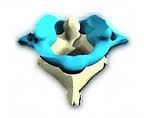
“The Master Control Centre” – C1 (Atlas Vertebra).

Located just behind your earlobe, your atlas is a 2-ounce bone at the top of your neck that is responsible for supporting the weight of your head – which can weigh between 9 and 17 pounds! Not only is the atlas the first bone in your neck, but it is the foundation of your head and centre of balance of your body.

The atlas surrounds and protects the upper spinal cord and brain stem region, and houses over three trillion of your nerve fibres that live feed ingoing/outgoing data from your brain to your whole body.

It is critical for an athlete to have this checked, as a misaligned atlas can affect reaction time, balance, speed, recovery, sleep, immune system, and peripheral vision – just to name a few.

Did you know:

Your atlas can be misaligned via impact, muscle imbalance, repetitive movements and stress. And in most cases you won’t even realise!

What exactly is a “misaligned atlas”?
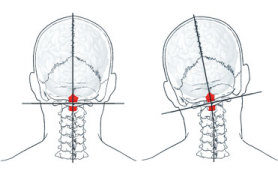
A misaligned atlas is essentially “vertebral subluxation”, where the head is not quite centred. And when your head is not sitting level over your atlas vertebra, your whole body can twist off centre. Essentially this creates a “domino effect” due to the pressure at the brain stem affecting your whole nerve system that feeds information to every part of your body On an x-ray, it simply looks like the head is at an angle to the base of the neck. In some cases it can be incredibly subtle, in others more extreme.

Side effects:

A misaligned atlas can result in tight neck muscles, neck pain, organ and joint dysfunction and the common headache. In some cases it can refer down the spine and result in lower back pain or other injuries or symptoms.

How can you tell if an Atlas is misaligned?

As a chiropractor, I studied the Atlas-Axis complex for four years – there’s much more to it than you may realise! Through specific tests, touch and observation I can tell immediately. However most people don’t have the luxury to spend four years on this one area!

Practitioners may use X-Rays as well as tests to observe the feet – looking at leg-length discrepancies. Others may be able to observe that simply by doing a postural assessment. A C.H.E.K Practitioner learns two key tests that can indicate if an Atlas is misaligned – one is a marching test, and the second is using two weight scales and identifying a weight shift. If you are interested in learning more, I recommend you seek out a C.H.E.K Practitioner or look into the CHEK program for further study.

How to fix it:

Atlas correction is a passive avenue to gain huge sporting advantages. However it is a very specialized field, so you will always need to go to – or refer your client to – a specialist in this area. Important note: Always be very aware of the specialist you use or refer to, because a simple “neck crack” does not always suffice! Often neck adjustments performed in this manner do not target the specific area of the joint that needs adjusting. There is a reason I spent four years studying this one area, and that is because it is incredibly complex. Rather than a generic approach, my method is to make small and specific adjustments in the area required, to ensure that my patient’s specific needs are addressed. I recommend you seek out someone who does the same if you suspect an atlas problem in the spine.

Next month’s FIT JOINT Series article will focus on the Knee.

Dr. Theresa Dobson

Doctor of Chiropractric, Neck Specialist, Neuromuscular Therapist, Biokinetics Practitioner, CHEK Holistic Lifestyle Coach Level II, Sports-Specific Practitioner and Seminar Presenter, Dr. Theresa Dobson has a long-standing rep utation as a highly experienced and knowledgeable practitioner. With two clinics located in Auckland and on the North Shore, Theresa works with a wide spectrum of patients such as professional rugby players, boxers, surfers, yachtsmen, cyclists, motor racers, soccer players, as well as recreational sportsmen and women of all age groups. Theresa is currently setting up a new business, guiding people through the “Dos and Don’ts” of surgery, offering programs and seminars to advise patients how to manage their pain effectively.
www.activecare.co.nz         www.stitchedup.co.nz
Theresa Dobson welcomes your emails at info@activecare.co.nz