Understanding the Principles of Functional Training

‘Functional Training’ is a term that has been used dare I say it “loosely” within our industry over the last few years.

So what does the term ‘Functional Training’ really mean?

What I will aim to do in this article is to give you an overview of some of the principles of functional training and how you can apply those principles to improve client performance through exercise prescription.

Let’s first take a look at some of the definitions of functional movement:

  • An exercise continuum involving balance and proprioception, performed with the feet on the ground and without machine assistance, such that strength is displayed in unstable conditions and body weight is managed in all movement planes.
  • Multi-joint, multi-planar, proprioceptively enriched activity that involves deceleration (force reduction), acceleration (force production) and stabilisation; controlled ammounts of instability; and management of gravity, ground reaction forces and momentum.
  • A spectrum of activities that condition the body consistent with its integrated movement/use.

All of these definitons authentically state what functional movement is, but with the growth of new trends within the health and fitness industry we tend to lose site of the application of some of these principles.

To keep things simple, I propose an alternative definition:

Functional Training involves movements which are specific to the task or purpose within a person/s activities of daily living.

Conditioned Athlete vs. Non-Conditioned Athlete
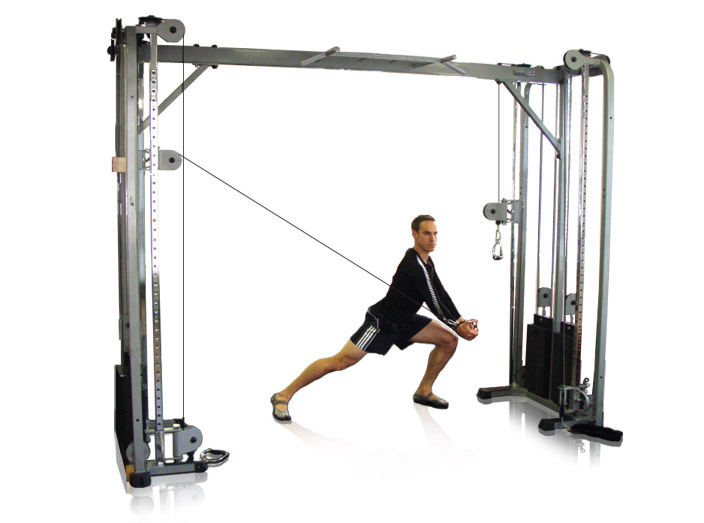
There seems to be a belief that sports activities differ from active daily living and that we should train our conditioned athletes one way and our non-conditioned athletes another way. While this is typically true in terms of power and performance, both activities share some basic features:

  • They involve skillful application of ground reaction forces.
  • Forces are transmitted through the body through a chain reaction.
  • Tasks are performed in 3 dimensional planes of motion.
  • In order to achieve balance and skills needed to perform these tasks, we regularly get into certain postions. As these tasks are performed more reguarly, motor programs and functional adaptions are reinforced.

For these reasons it’s helpful to re-think the traditional distinction between athletic and non-athlethic activities.

Therefore when designing a program we can look at the fundamentals of the type of activity which is being performed by either the conditioned athlete or the non-conditioned athlete. Then we can then determine the role ‘functional training’ will play in either the enhancement of performance or is helpful in improving the overhall quality of life.

Principles of Function

Principle 1 

Function is 3 Dimensional and includes all three planes of movement:

  • Sagittal: Front to Back
  • Frontal: side to side
  • Transverse: Rotational

Principle 2

The physical forces that the body has to contend with are:

  • Gravity
  • Ground Reaction Forces
  • Momentum

Principle 3

Movement is Driven

  • Drivers of the body

Note: For example we would classify the foot as the driver during an anterior balance reach with the foot reaching towards the specified target.

Principle 4

  • Chain Reaction

As 3D movement includes the whole body and involves multiple joints, we must therefore assume that there will be a chain reaction created throughout the body as we deal with the physical forces.

Applying these Principles of Functional Training

As trainers we all have an understanding of exercise prescription and an abundance of different exercises to choose from in our forever expanding tool bag.

However we must understand that it is not the exercise that will determine the success of the movement – it is the movement that will determine the success of our exercise prescription.

I often see clients that have come to me for post-rehabilitation after several weeks of working with a health professional during the acute phase of injury. These clients have mostly had a reduction in pain and are therefore ready to engage in a post-rehabilitative exercise program.

After an initial subjective summary we start to build a picture of the client’s functional health and activity history. An example of this would be a client who sprained their left ankle 6 months ago and received no treatment for that injury. A great one to remember for later on, whilst performing the client’s functional assessment.

A typical functional assessment would include:

  • Gait evaluation
  • Balance Reach
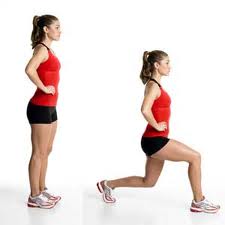
  • Lunge
  • Excursion Tests
  • Other Tests

Staying within our principles of function, let’s take a look at the balance reach assessment.

For example:

Observing the Sagittal Plane Balance Reach
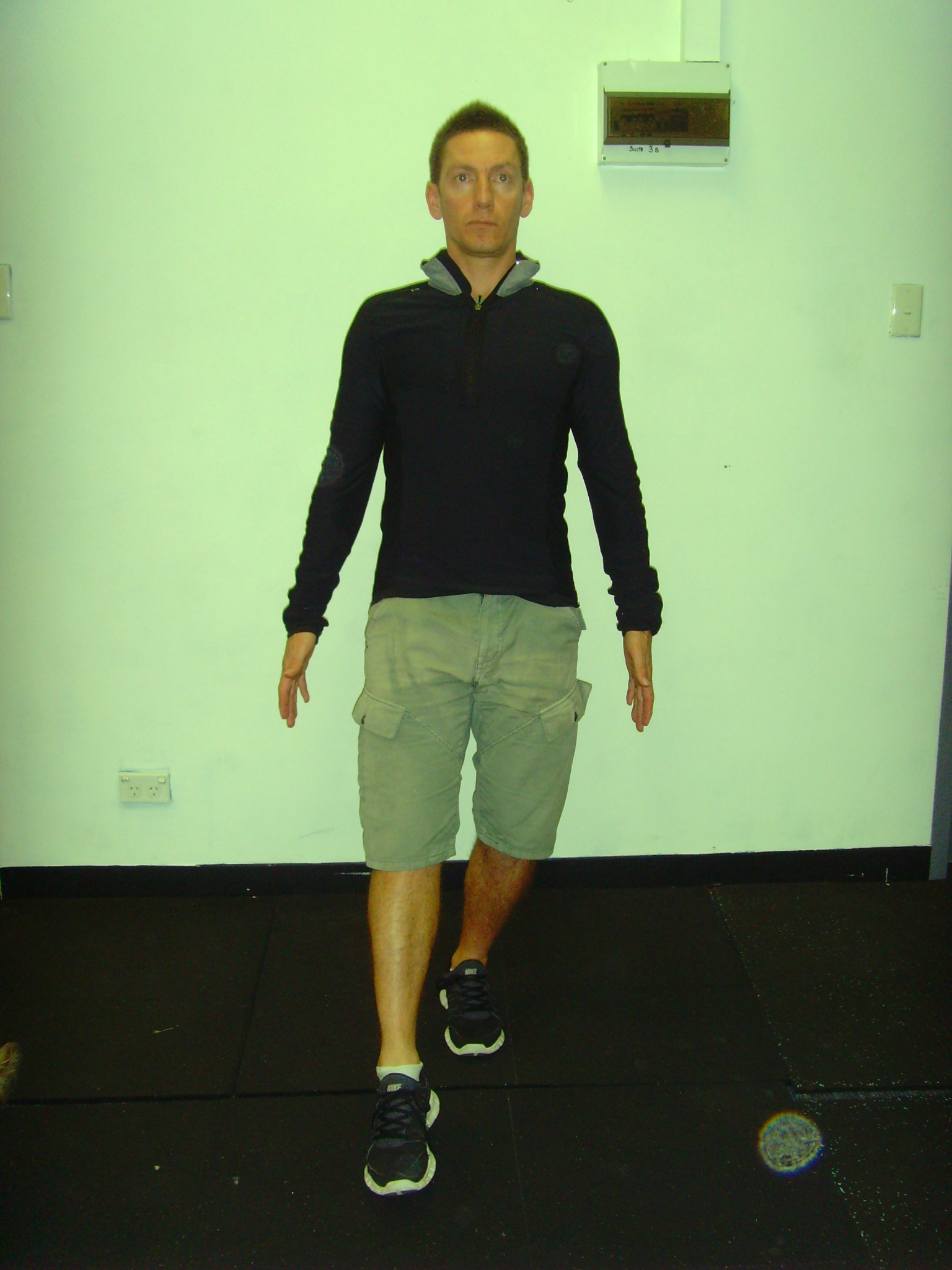
We direct our client to reach their right leg anteriorly and posteriorly at a verticality of ground and at a distance of mid range.

Results

Interestingly during our observation our client shows a limitation in dorsi-flexion through the left ankle complex when reaching the right leg anteriorly.

Exercise Prescription

On completion of our functional evaluation we can review our subjective summary and observation of functional movement before we determine our exercise prescription. The great thing about a functional assessment is that some of the exercises that we use to assess our clients may be also prescribed in our exercise selection.

For example

Balance Reach Observation

Our observation in the sagital plane showed a degree of limitation in dorsiflexion in the left ankle on a anterior reach with the foot as the driver.

Corrective Exercise selection
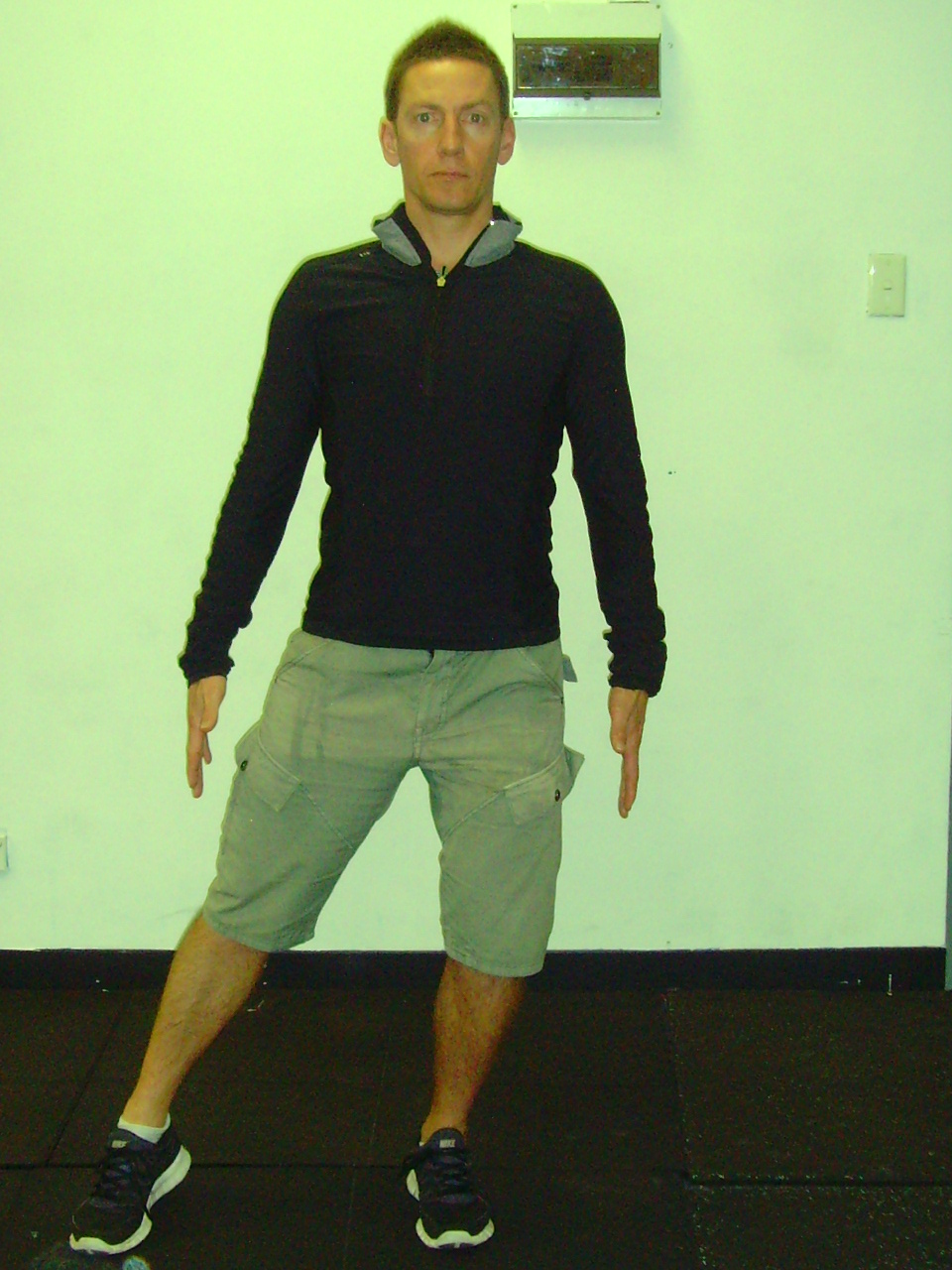
Balance Reach – Frontal Plane

Frontal plane reach with foot driver working within the ‘threshold of success’ – same exercise selection but alternative plane selected to work on improving the mobility of the ankle complex.

Conclusion

Observing our client’s movement in all three planes of motion may help us to identify a series of limitations in their functional capabilities.

Clients learn new skills in stages so it is important to work with our clients within the ‘threshold of success’. It is important to recognise these stages and to prescribe your exercises accordingly.

Mistakes play an important role in how we learn, as long as we are adhering to the main principles of function and our mistakes are minimal. The trainer must be able to identify those mistakes and be able to provide a solution to enhance our client’s functional capabilities.

References:

  • Mentoring Workshop 2011 Dirk Crafford Orthopaedic Rehab and Performance Consultant and Founder of Functional Health Fitness
  • Santanaj.c. (2000) Functional Training Boca Raton FL: Optimal performance systems

Dean Quirke
Master Dip. Fitness Testing & Sports Therapy, Dip. Exercise Science, BWLA Weight Lifting Coach, Advanced Strength Training AGSHSS Corrective Exercise Level 2, AGSHSS Pre & Post Natal Exercise, AGSHSS Myofascial Trigger Point Release Therapy, CHEK Exercise Coach,NLP & Transformational Coach, GRAVITYPost-rehab Trainer. Dean specialises in corrective exercise, injury prevention, weight management and special populations. Based out of Sydney, Dean’s passions lie within movement and rehabilitation. This has led him on an incredible journey of self discovery and education. Dean believes there is a great need and a requirement to be open-minded and adaptable in order to be successful in this field.
www.holistichealthconcepts.com
Ph: 04 3144 1213  or   Mob: 0431 441 213
“We don’t stop playing because we grow old; we grow old because we stop playing.” – George Bernard Shaw
Make What Is Yours

By Josh Smith

“The only time success comes before work is in the dictionary”…

The freedom to choose; to decide; and to determine our own outcomes is the most powerful ability human beings have over our animal counterparts.

We have the ability to see a situation unfolding, process it, and then decide which path of future action we wish to take. More often than not, we take the paths that are familiar to us, that have meaning to us, and which allow us to continue living comfortably and happily. And more often than not there is nothing wrong with this!

But I believe it is the continual striving for the comfortable, the need for the familiar, and the lack of motivation to break free of the ‘norm’, that all too often limits our chances to transcend our capabilities.

How often have you heard it said of famous authors, inventors, and entrepreneurs that their success comes not from following the paths of those in front of them, but from beating down new paths behind them? They forge their own way; creating new beliefs, developing new philosophies and changing the consciousness of hundreds, thousands or even MILLIONS of people in the process!

These people live life knowing that the decisions they make and how they choose to spend their time has a direct impact upon the way their life pans out, and ultimately, the successes to which themselves, their families and their businesses reach.

So this month I ask the following:

Is your time being best used to maximise your potential life success?

Do you spend time working on developing yourself, becoming better in your chosen field of work or establishing and maintaining healthy relationships with your friends and family?

If not…is now the time to do so?

It is constantly said that it is small things we do, day to day, that make the biggest differences in our lives.

So today…

  • Instead of spending your lunch break talking about last night’s X-Factor or Biggest Loser results, why not spending it engaging a co-worker in a meaningful conversation?
  • Instead of sneaking minutes looking over friends’ photos and news feeds on Facebook, why not spend those minutes trawling the net for informative articles and stories?

You will be amazed at how your life can change from just swapping the minutes you spend on intellect-depleting distractions to energy-creating pro-actions!

It is within you.

Josh Smith
Josh is the Director of Mitise Health & Fitness, offering Personal Training, Nutritional Guidance, Lifestyle Coaching, Personal Development, Corporate Seminars, BootCamps and Boxing Groups. Josh is a qualified CHEK Exercise Coach, CHEK Holistic Lifestyle Coach Level 1 and GRAVITYPersonalTrainer, along with various other qualifications and trainings, and is a very inspirational individual. Mitise (pronounced my-ties) is a word invented by Josh and actually stands for “It is within/in Me“. Check out the spelling of Mitise and you’ll see the connection. Clever huh!

www.mitisehealth.com
twitter.com/MitiseHealth

Posture and Pain

By Michelle Owen.

The Impact of Forward Head Posture.

Other than acute injury or trauma, most of the mild discomfort or chronic pain felt in the neck, shoulders and back are contributed by adopting poor posture. This adoption of poor posture can start in our early childhood years and progressively develop over time into pain, discomfort and for some, debilitating illness.

In Fig 1 (right) we see on the left good posture – where the line running through the ear, middle of the shoulder (as well as the hip and ankle if they were in view).

On the right however, we see that the head has migrated forward and the ear lobe does not line up.

Every inch your head is forward in posture, you are adding the additional weight of your head.

If your head posture is 3 inches forward from the correct position you will have added 3 times the normal weight, which is an additional 10 to 15 kg of load on the spinal column where the head and neck joins the back (Fig 1 No 1 & 2).

The effects are never felt immediately as neck and back problems develop over time and can start from a very early age, for example from poor sitting posture at school or carrying heavy back packs.

As a result of having a forward head posture and rounded shoulders, (Fig 1 No 3) the angle of the first rib gets depressed. The result of this is that major organs in your body will become compressed and not be able to sit in their proper location and position. This restricts them from proper healthy function and adds additional and unnecessary stress to your body. It will also affect your overall wellness, vitality and quality of life.

Quite often people will develop a fatty tissue deposit called a Dowager’s Hump located where the neck meets the upper spine, as the body attempts to stabilise the additional head weight. There is also a huge pressure exerted on the spinal cord (Fig 1 No 2). Its ability to carry messages and feelings is restricted and impaired to the point where we suffer severe problems.

Other examples of areas affected by poor posture are poor lymphatic drainage and poor circulation throughout your body – the pump system including the heart, diaphragm etc.

The spine also houses the spinal cord, which is an intricate sensory network that runs through the vertebrae to transmit feeling and movement commands from the brain throughout the entire body.

When posture is poor we are putting pressure on the whole nervous system and this is extremely draining to our daily energy and vitality.

Correcting Poor Posture

If you have forward head posture you will most likely have other related issues that also need to be addressed. The only way to correct poor posture is to treat the body as a whole.

As a C.H.E.K. Practitioner Level 3, I will begin with a comprehensive in-depth Postural and Orthopedic Analysis. From this assessment I can determine which muscles are tight, weak or long.

Once a program has been designed to correct the imbalances in the body that are causing the discomfort or pain, the client begins to learn a specific stretching plan to stretch “the tight muscles only”. Upon mastering this we would move along to stabilise the spine and the weak muscles throughout the body that we found during the assessment.

From there we move into functional movement patterns that we do on a daily basis, to strengthen the body as a whole. This becomes the base of the strength and conditioning program to move the client into other goals that they may want to achieve. These may include things such as body fat loss, muscle shape/tone, and strength for home, work or sports.

Our body is just like a car. We can be a vintage in great condition or a new model all beaten up and not running well. Age does not have to determine our condition.

If you have mild discomfort now, it will not correct itself, it will only amplify as time goes on.

Remember, prevention is always better than cure!

Footnote

If you have imbalance in your body and you do a balanced fitness programme you will have no chance to correct the imbalance. Fixing muscle imbalance is very individualised. Your body needs to be coached out of imbalance through specific exercise as well as a re-education process that addresses every other area of your life, e.g. sitting, walking, lifting, working positions etc. This is done at a neural, (brain) level. We have to re-educate the way that we think about our posture.

Also, you could have the best exercise program in the world but if you did not apply the six foundation principles you may not have the ability to recover and repair. Using the 6 Life Principles we can support the postural correction with improvements in our overall wellness. For more on the 6 Life Principles visit www.michelleowen.co.nz

A Note from Michelle.

In this article you have read about the impact of poor head posture and the effect this has on our whole body. It is
imperative to point out that any poor posture in any part of our bodies impacts on the rest of our body. I am using Forward Head Posture as an example and it is only one common postural dysfunction that isrequired to be treated in many people.

Information resourced from “C.H.E.K Practitioner Level 3 manual” from Paul Chek and the C.H.E.K Institute.

Michelle Owen
Michelle is a C.H.E.K Practitioner Level 3 and CHEK Holistic Lifestyle Coach Level 3. With a successful studio in Auckland, New Zealand, Michelle works as a Postural and Wellness Specialist, Lifestyle Coach and Practitioner. She also offers onsite Corporate Wellness Seminars and has spoken for a number of corporate companies including Hyatt Regency, Kensington Swan and ANZ Bank. As a Key Note Speaker, Michelle is passionate about bringing the CHEK principles to people everywhere.

www.michelleowen.co.nz

What Role Does ROI Play In Your Business?

We are in a time when now more than ever, setting up a business is not as easy as 1, 2, 3.

We need to consider a multitude of factors and are often restricted by a limited budget and strict timeframe.

So how do you start up a business – maximise your return – and most importantly survive the statistics of failing as a small business within 2 – 5 years?

Possibly one of the most important factors that is often overlooked – is your ROI.

So what is “ROI”?

ROI stands for Return on Investment (also known as “rate of return”, “rate of profit”, or simply “return”). Basically it is the ratio of money coming in (cash flow / income / profit), relative to the total amount invested (capital / asset / expense).

Now if you start getting into this it can get quite complicated, however for the purpose of this article we’ll simplify it right down.

In regards to your fitness business, the key factors you want to look at in regards to your ROI is:

  • How long will it take you to recover the money you have invested?
  • Will you still be paying the equipment off in 6 months? 12 months? 2 years? Longer?

Key ROI tips when Setting Up Your Business…

Tip #1 – Avoid Unhealthy Debt

You don’t need to purchase everything outright when you first start out! Always consider your budget. If you have savings and can purchase outright – fantastic! If however you need finance, then that’s another story.

Do you already have debt? If so – will more finance add extra pressure and stress to you and your business before you even start?

If you have no existing debt but do need finance – then the next step is to consider what you need vs. what you simply want. Wants and needs are two very different things!

Unhealthy debt creates a stranglehold on your business. It generates stress and creates unnecessary pressure as you build your business.

Positive debt (if it can be called this…!) is based on your projected rate of return or ROI realistically being achieved within a minimal timeframe; from 6 to 12 months.

In regards to your fitness equipment selection, always choose equipment that is within your means (budget) and not excessive to needs. Therefore you will maximise your ROI and ensure you will pay it off within a reasonable time frame.

From here you can make the choice to gradually invest in more equipment. A positive method is to save as you go, and only invest in more equipment that you can purchase outright. Then you can safely do so with the knowledge that you’re not adding extra pressure to yourself or your business.

And…you can make a big deal about new equipment coming in via newsletter and social media so your clients start getting excited about these new toys!

Tip #2 – Set Up the Smart Way

Setting up the smart way” begins from Day 1 of planning your business. The questions you need to keep asking yourself are

What is the most cost-effective way to do this?”

And “Does this fit within my budget or is this excess to needs?

Now some things can’t be helped – accountant, insurance, design work, business cards. However some of these things can be helped with a little know-how, or thinking outside the square.

  • Can you do a contra with a professional you know (contra personal training for work)?
  • Are you social-media savvy enough to start up your presence via social media to save on initial website costs?
  • Can you get free publicity?
  • Can you work out a deal on space i.e. utilising the room of another business until you have enough money to move into your own space?
  • Can you get in someone else to help cover the costs?

Maximising your ROI means cutting down your expenses – which is a matter of thinking outside the square!

Tip # 3 – Select the Right Equipment for your Business Model

The key investment for your start-up business should be fitness equipment, second only to upgrading a room or area as your working space (if you have the money to do so).

In deciding what equipment you’re going to purchase, it’s important to think about the following:

  • What will your point of difference be?
  • What space do you have available?
  • What is your primary training model? (personal training/multi-client/group/team)
  • And most importantly – what is the minimal equipment that will achieve all of this for you to start out with?

It is for these reasons and more that fitness professionals are now opting for a functional training studio over purchasing static, single-plane machines.

Functional fitness equipment often offers a multitude of exercise options that can be performed and tailored to the clients’ individual needs.

Most static machines on the other hand have limited use and simply take up space.

Functional = diversity + maximum use of space.

Other factors to consider when selecting your initial and ongoing fitness equipment:

  • Does the product present longevity? – i.e. they won’t present dated training methods in 2, 5 or 10 years.
  • Does the product offer diversity? – i.e. they offer a number of different exercise options with the one product
  • Can the product work for you? – i.e. is there a product that can be used by your clients unsupervised and offer extra income to your business?

In addition, it’s never a bad idea to consider products that will either create an added point of difference, such as:

  • Foam Rollers (for after-session use)

Or in some cases invest in higher priced items that can pay for itself unsupervised, and is based on a booking system. Examples include:

  • Inversion Table
  • InfraRed Sauna
  • InfraRed Light

By considering an added point of difference you can maximise your profits, and set yourself apart!

Solutions!

In summary, when planning your business:

  1. Avoid Unhealthy Debt
  2. Set Up the Smart Way
  3. Select the Right Equipment for Your Business Model

Always consider your ROI…take the time to research all the options available to you…and make the smartest decision that meets your needs, in the most affordable way.

Final Note – from HQH Fitness

Why Total Gym is great for ROI.

HQH Fitness truly believe in and back Total Gym as a product. This is not only because it’s such a high quality product, but also because of the ROI Factor.

Total Gym offers great rewards.

As a product it is unique and diverse – it not only has personal training and multi-client personal training applications, but also group, Pilates and Post-rehab programming to work within any fitness or wellness business model. It works amazingly well as a centrepiece for Circuits and Small Group Training or Team Training.

The diversity alone means you can increase what you offer, position yourself apart, and have minimal space working for you 24/7.

With complete education support, free online marketing tools, and for such a minimal investment, it’s just like a franchise model – without any of the on-going fees.

Many HQH Fitness customers simply choose Total Gym and a few accessories to begin with, pay off their equipment within the first 6 months, and after that…it’s pure profit.

From there, they will gradually add other tools and equipment – and build up their business as they go, doing so in a way that means they aren’t suffering financially as they go.

HQH Fitness even offer a free interactive Business Planner where you can work out your own ROI with Total Gym!

If you’re interested in setting up a studio, click here to learn more about different models and options.

Shara Curlett
Shara began her career in the fitness industry at Les Mills Dunedin in 2005 and from there combined her passion for fitness with her strength in business to create a niche role for herself specialising in “the business of fitness”. Shara has consulted for gyms and small studios, developed an indoor cycling program, and continues to work one on one with fitness business owners as a sideline passion. As business development and marketing manager for HQH Fitness, Shara is focused on business development, company strategy and marketing and is passionate about helping business owners achieve their goals.

3D Functional Strategies for Improving Movement

By Dean Quirke

As a trainer your aim is to fulfil the needs of your client through correct exercise perscription and guidance, that will help you to enhance their movement and overall function.

This article is designed to help you to identify some of the movement challenges presented to you by your clients and to give you some creative tools and strategies for developing a correct and safe training plan.

Identifying Movement Limitations through Screening

Prior to starting a personal training session with a client, it is important to observe and assess any movement limitations that they may have.

Developing a systematic approach to screening clients through movement and determining the limitations that a specific joint complex may have in relation to the acceptable ranges, will help to create a corective strategy and training plan.

Understanding How We Move

Interestingly we may refer to a client’s movement goals, exercise history and biomechanical abilities before we make the assumption of how an individual moves.

To get a greater understanding of human beings, we must be aware of how the body moves in a three dimensional space.

Triangulation is a concept patented by Physical Therapist Gary Gray.

This refers to movement within a three dimensional space which creates three aspects of motion – Tri – and the angulations which are:

  • Direction. Refers to the Plane of Motion i.e. Sagittal (forward and back), Frontal (side to side) and Transverse (rotational).
  • Height. Refers to the movement created either from the ground, the base of an object or from directly above. For example when a client is performing a balance reach with the arm as the driver, we can give the instruction of reaching “knee height”, chest height”, shoulder height”, or “above head height”.
  • Distance. Refers to how far away from the base the movement is.

How to Identify A Client’s “Real” Movement

During my ealier days as a personal trainer I was so focused on emphasising correct posture, alignment and learned cueing, that I sometimes missed what the “Real” movement was.

Real movements are typically movements that we don’t think about, we just do them. Examples of Real movements could be:

  • Bending down to tie a shoelace
  • Opening a door

So in relating this to your session, the way to identify a client’s Real movement is to do this subconciously.

How to Achieve A Desired Movement Subconsciously

To achieve a desired movement subconciously with a client, we can employ the use of an external objective.

Example 1 – The Lunge

While asking a client to perform a lunge you may notice that the client is showing limited right hip adduction. This may draw you to ‘consciously’ cue more hip adduction.

However beware – this strategy could potentially lead to more compensatory patterns developing. Why? Because the focus of performing a lunge is drawn solely on adducting the hip, the surrounding joints and movement may be affected when intense focus is placed on correcting the imbalance.

Instead, you could invite the client to perform the same anterior lunge however this time – rather than mentioning the adduction of the right hip – instead give them an external objective to focus on.

For example instruct them to drive the right hand, left and laterally over the head to address the right hip imbalance.

Other objectives could also be employed if your client presented a multitude of imbalances.

Example 2 – The Squat

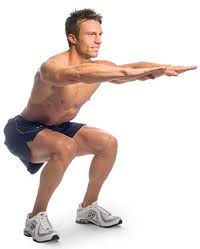
Another example we could look at is the Squat, possibly the most talked about and written about exercise in the industry.

Initially when you ask a client to perform a squat, observation takes place with the client’s range of motion and execution of the exercise.

The client may present limitations in the range of movement in the ankle and hip complex. Commonly these may be represented by a heel lift and excessive forward lean. Naturally “conscious” cueing is considered to address these imbalances by asking the client to “maintain a lift through the chest”, or by reducing the depth of the squat, just to name a couple.

Another option to consider is to employ an external objective for the client to focus on.

For example when the client is performing the squat, ask them to reach with two hands anteriorly at a verticality of chest height with a distance of full range.

The client initiates the squat with their arms in this position, lowering into the squat until their arms come in contact with a dowel rod that will be holding below their outstretched arms. This way you can control the quality, depth and success of the squat executed.

Summary

There are many reasons why a subconcious strategy is of benefit when screening and training your client, but for me I have found that the carry-over from a subconscious level into normal movement has been instant and long lasting.

Clients have shown improvements in decreasing pain, functional limitations and sporting performance. Interestingly enough, it also provides the trainer with a blank canvas on which to become creative with their program design.

So good luck and have fun getting creative!

References

  1. Gary G & Tiberio Fuctional Video Digest
  2. Myers T.(2004) Anatomy Trains Churchill Livingstone

Dean Quirke
Dean is a NLP & Transformational Coach, CHEK Exercise Coach, GRAVITYPost-rehab Trainer and specialises in corrective exercise, injury prevention, weight management and special populations. Based out of Sydney, Dean’s passions lie within Movement and Rehabilitation, which has led him on an incredible journey of self discovery and education. Having sought out some of the foreward thinkers and innovative educators of our time, he has discovered that there is great need and a requirement to be open-minded and adaptable in order to be successful in this field. Dean likes to work with people that want to improve their lives on all levels but are just missing the one thing to make it happen…the tools! Getting results in a structured progressive manner is the key to his success.

“We don’t stop playing because we grow old; we grow old because we stop playing.” – George Bernard Shaw
Total Gym Test Drive Tour NSW / ACT

Greg Doherty, CEO of HQH Fitness, talks about the latest Total Gym Test Drive Tour to NSW and ACT:

July 24th I set off on the second official Total Gym Test Drive Tour!

I was able to visit Galy O’Connor in French’s Forrest who just bought a new Total Gym PowerTower!

I checked out her home studio set-up (right) which is awesome – it just goes to show that you don’t need an expensive space to make a great business work!

Great work Galy!

From there I made the drive down to Canberra to visit a couple of facilities there. I’m happy to now welcome Graeme Sproule and his team at SportsCare and Physio Therapy in Dickson to the Total Gym family. They will be taking delivery of a new Total Gym GTS  today!

The University of  Canberra was another stop I made where I met some of the team – John Stelzer, Kate and Darren.

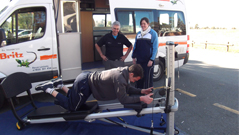
We did a “parking lot demo” where Darren got on board and did a workout! He gave it a good go and definitely enjoyed it.

Darren even reported back to me as being sore the next day – great job Darren!

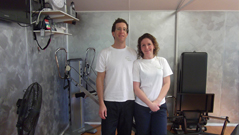
From here I was able to visit Melanie Hrusik at Vigour PT, a customer who bought Total Gym in 2009.

Melanie has a great set-up where she has converted her garage to a full on multi-purpose training studio. Initially she purchased 3 Total Gym Classic GTS02 units.

Since then has purchased 2 more and the business grew so much that she was able to take on her husband Rowan as a second trainer in the business! They now have a great lifestyle business in a lovely neighbourhood.

Heading Back to Sydney I made a stop in at Bowral. What a lucky chance I had to see some of  Australia’s beautiful country towns. Fantastic scenery on the M5 to Canberra. And I loved the Rest Areas, where I did the “Stop-Revive-Survive”!

Back in Sydney, I discovered a new neighbourhood – Leichardt, which is an inner west suburb where the Leichardt Park Aquatic Centre is based. This is a fabulous facility in a great setting.

Here I was able to connect with an HQH Fitness customer  from years back where I showed him the new Total Gym GTS.

From here I stopped in at Fitness First Pitt St and gave a demo to several of the personal trainers there.

While I was in Sydney I did spend some time organising our warehouse stock and meeting with finance and logistics suppliers. I’m happy to say we have some great finance/rental options for Australian clients that will make it very easy  for anyone with the desire to get started with Total Gym.

Also I’m very pleased to say we met with a  new  business partner, who will be able to facilitate a new product to your door – Doorstep delivery! And, for a little more will unpack and install the product onsite. Very exciting!

I have just put together my next three Test Drive Tour dates so that we can get you to experience first-hand the new Total Gym. These are as follows:

Sydney NSW  and surrounding areas, Canberra, Newcastle Oct 5-14

Brisbane, Queensland , Gold coast Sunshine Coast  Nov 4th to Nov 9th

Melbourne Vic , Geelong and  surrounding areas Dec 4 to 10th

Book your appointment now so we can get more BOB’s! (Butts on Board!)

To jump on our next Test Drive Tour Australia – email admin@hqh.com, use our ‘Contact Us‘ online form, or phone 1800 552 878.

If you are based in New Zealand and want to check out the new Total Gym GTS, then contact Kerry our National Sales Manager on totalgym@hqh.com or phone 0800 552 8789.

Greg Doherty
Greg is the CEO and Director of HQH Fitness. As a business owner, C.H.E.K Level 3 and CHEK Holistic Lifestyle Coach Level 3, Greg has worked with thousands of businesses and fitness professionals over the past 16 years  and understands the various needs of a business. Having successfully built up the CHEK program in Australia, he is now focused on bringing the benefits of Total Gym to Australia on a larger scale.
gregd@hqh.com

Expand, Grow, Live!

Insight from Josh Smith

Looking out of Mitise Health and Fitness’ office window, I am able to see vast distances in all directions.

I can view the steadily rising Adelaide Hills in the south, with houses scattered sparsely across their slopes. Blending down into the densely populated inner city suburbs, the hills gradually make way for the towering concrete buildings of the CBD, stacked floor upon floor of workers, day in, day out.

As I scan further to the north, I am able to see the new projects our government is undertaking, from the new hospital to new housing estates and local community developments. Continuing my scan west, I eventually come to the see the deep blue sea of the Gulf, with its shipping port acting as a gateway to the world’s oceans.

During this relatively quick viewing of my small home town, I came to the realisation that there is a substantial amount of opportunity in the world for us as individuals:

  • For business growth
  • For personal development
  • For social connections
  • For education
  • For financial gain
  • For physical capabilities

…just to name a few.

These opportunities are presented to us every day, in our work, our home lives, and during our spare time. But what do we do with them? What CAN we do with them?

Well…

YOU can develop, build, and change any of these in any which way you see fit, given the right amount of time and effort.

YOU can start a business, today, and build it to be bigger than Nike or McDonalds.

YOU are able to read, which gives you access to hundreds of thousands of personal development coaches, gurus and experts the world over, in books and magazines.

YOU can learn, from any and all of these coaches, strategies to look at the world differently, to relate to people better, and to increase the quality of your life.

YOU can join new sporting teams, social groups or professional bodies.

YOU can pick up a new textbook, download a new podcast, or watch a new DVD, and immediately learn something new about the world.

YOU have the ability to save more money, whether its one dollar or one hundred dollars, and re-invest it to make you MORE money.

YOU can spend more time at the gym or the local park, or you can take the stairs instead of the elevator.

YOU can lift more weights, go for a longer run or join a Pilates class, taking your body ever closer to that body you always dreamed of.

YOU could repeat this process over and over again, gaining new friends, new networks, bigger business, more financial freedom, unlimited knowledge, a greater level of self awareness, of social responsibility, of physical capacity.

Yet you don’t.

Why not?

Is it time that you did something different? Time you explored new avenues, or finally stepped out of your comfort zone?

It is only by getting out of our current comfort zones that we can seek to grow and develop as human beings, taking ourselves to that next level, the one we are always striving for yet never seem to reach.

So this month I challenge you to take the first step, climb that first rung, and do something different to that which you have always done. You will never know where it may lead you…

Josh Smith
Josh is the Director of Mitise Health & Fitness, offering Personal Training, Nutritional Guidance, Lifestyle Coaching, Personal Development, Corporate Seminars, BootCamps and Boxing Groups. Josh is a qualified CHEK Exercise Coach, CHEK Holistic Lifestyle Coach Level 1 and GRAVITYPersonalTrainer, along with various other qualifications and trainings, and is a very inspirational individual. Mitise (pronounced my-ties) is a word invented by Josh and actually stands for “It is within/in Me“. Check out the spelling of Mitise and you’ll see the connection. Clever huh!

www.mitisehealth.com
twitter.com/MitiseHealth

Sleep-Wake Cycle

By Michelle Owen

Sleep and Maintaining A Good Body Clock

Each of us has an internal body clock called the Suprachaismatic Nucleus that regulates our daily sleep-wake patterns. This is often referred to as the “Body Clock” and it governs the release and timing of most mood, energy and sleep related hormones.

The body clock is dependant on light signals to function properly each day, dawn and dusk allows us to know when wake up or go to sleep.

For many people their lifestyles, living conditions, work, health and other conditions don’t allow them to get the correct sleep-wake signals anymore.

When we don’t get these correct signals, our sleep – wake patterns suffer and this can develop into a sleep disorder. When we have disrupted sleep patterns our body becomes stressed from the release of hormones at incorrect times in the day.

Good quality sleep gives the body a chance to repair, recover and heal.

  • We get our physiological recovery between 10pm and 12am
  • We get our psychological and nervous system recovery between 2am and 6am.

If you are getting into bed at 12pm on a regular basis it means that you are missing two hours a night of your physical recovery. This can result in all sorts of aches pains and niggles that will simply not get better.

When our bodies are healthy we can get away with the odd late night here or there without affecting us too much. However, when we abuse our sleep times on a regular basis, this becomes a major stress to the body, upsetting hormonal balance and causing adrenal fatigue. When the body is under stress of any sort, the immune system suffers…THERE ARE NO EXCEPTIONS TO THIS!

But what if my sleeping patterns are due to my job?

Sometimes we cannot change our sleeping situation, for example, shift workers or parents with new babies. In these situations it is important to look after yourself in all other areas of your life to reduce overall load, that’s where the Six Foundation Life Principles come in.

Our daily sleep-wake patterns are called circadian rhythms. ‘Circadian‘ is Latin for ‘about a day‘. If you struggle with sleep, a circadian rhythm disorder is probably a factor. The body clock uses signals like sunlight and darkness to know when to produce the active hormones and when to shut them down and release the night time withdrawal and sleep hormones.

Our bodies crave and need regularity in all areas of our lives and this is not just related to sleep. Our bodies thrive when we have regular eating, sleeping, hydration, exercise and other important life principles. If we have the required regularity then our system will be in time with our body clock. When we lose the regularity that our system needs them we suffer in many areas.

Things that inhibit sleep

Many things can disrupt our sleep-wake cycles:

  • Working late in bright lights (especially fluorescent)
  • Electromagnetic stress from computers
  • TVs flickering
  • Training at high intensities late in the evening
  • Coffee
  • Energy drinks
  • Sweet desserts
  • And more!

In addition, alcohol and sugar can both make you crash to sleep but then wake later in the night through a drop in blood sugar level, to find yourself tossing and turning in the early hours and feeling hungry.

Toxicity in the body is also a common thing today as people eat more and more processed foods, bad fats, food colourings and preservatives.

Entrainment is another factor. People can retrain a sleep pattern with in 7 to 21 days. For example if you stay up till midnight for three weeks in a row your internal body clock will be trained to wait till midnight to start Cortisol reduction. This means melatonin, the sleep recovery and repair hormone kick in very late and you will be robbed of recovery time. Over time this can lead to chronic fatigue, adrenal stress, suppressed immune function and poor or impaired physiological repair resulting in aches pains and niggles.

Did you know…

When you get up in the night and switch on a light your sleep-wake centre will think the light is dawn and it will release Cortisol, serotonin and other alertness hormones. This diminishes the melatonin (sleep hormone) and makes it difficult to resume your sleep.You get back into bed and you try to get back to sleep. Your body has gone into wake-up mode and this is why many people have trouble getting back to sleep.

Sleeping In The Day

If you have to sleep during the day I recommend that you always wear an eye mask and make the room as dark as possible. This will reduce the amount of light filtering through eye lids and assist in a better quality of nap or sleep.

By doing this you will get a far better quality of sleep and you will wake up feeling a lot more refreshed than if you try to sleep without one.

Tips to assist you in getting good quality sleep:

As the evening goes you can assist with the reduction of Cortisol (stress hormone) from your body and increase melatonin (sleep hormone). There are many ways to do this and everyone will have something different that appeals to them. Some of these are:

  • A hot relaxing bath
  • Dim the lights
  • Candles
  • Massage
  • Deep diaphragmatic breathing
  • Meditation
  • Soft music
  • Positive reading

As well as these, the following tips are helpful:

  • It is healthy for your sleep cycle if you do not go to bed with either a full or on an empty stomach.
  • Eating a correct snack for your Metabolic Type will help greatly with the quality of your sleep.
  • If you have a busy mind try writing your thoughts in a journal to get them out instead of them racing around in your head while trying to sleep.

Sleep well.

Information resourced from “How to Eat, Move and Be Healthy!” by Paul Chek, available from www.hqh.com

Michelle Owen
Michelle is a C.H.E.K Practitioner Level 3 and CHEK Holistic Lifestyle Coach Level 3. With a successful studio in Auckland, New Zealand, Michelle works as a Postural and Wellness Specialist, Lifestyle Coach and Practitioner. She also offers onsite Corporate Wellness Seminars and has spoken for a number of corporate companies including Hyatt Regency, Kensington Swan and ANZ Bank. As a Key Note Speaker, Michelle is passionate about bringing the CHEK principles to people everywhere.

www.michelleowen.co.nz

Small Group Training – Breaking it Down

There has been a significant shift within the fitness industry over the past few years with Small Group Training growing in leaps and bounds.

In the age of quick information where trends travel fast, savvy fitness professionals are getting on board with their entrepreneurial spirit by realising the benefits of training more than one client at a time.

And when you look at bottom line, Small Group Training makes inherent sense.

Total Gym®, one of the first international fitness equipment companies to truly embrace the Small Group Training model, brought this concept to the forefront of peoples’ minds when they launched their commercial product line in 2003.

With their education programs centred around Small Group Training on Total Gym, fitness business owners everywhere quickly recognised the benefits of this highly profitable and time-efficient training model.

In the following article we break down the Small Group Training model and take a closer look at this new phenomenon that is transforming fitness businesses around the world.

Small Group Training can essentially be broken down into two formats:

  1. Team Training
  2. Multi-Client Training

1. TEAM TRAINING

Team Training offers camaraderie – a group of individuals getting together for a common purpose. With a general target of 4 – 12+ participants, this is most commonly a pre-programmed approach which may or may not be musicality-based.

Different approaches fit within this model including Circuits, Stations (e.g. 2×2 or 3×3), 50:50 set up (e.g. Total Gym and Spinning), as well as Bootcamps or Challenges.

Payment is low per person, anywhere from around $10 – 20 per session (depending on what your hourly target is), making it incredibly affordable for clients.

Fiona Caddies of FiTraining, Australia, has set up her studio with the Team Training model in full effect.

She uses two Total Gym Classic PowerTowers, TRX, spinning, dumbbells, Bosu and other training tools to train multiple clients at a time.

As a result, she ensures that she lives the lifestyle of her dreams.

“I have a four day weekend, every weekend. It’s a great lifestyle choice.” Says Fiona.
Click here to view her story.

So…if you’re on board the Team Training approach the question is – how should you charge your clients?

Within the Team Training approach the most common payment options are:

  • Class Model
  • Program Model

Class Model

The class model is based around the “pay per session” concept, with the most common method being via concession card. Whilst this leaves it open for clients to drop in when it suits them, it means that attendance is uncertain and income is dependent on all booked clients showing up.

This is an unstable model that results in fluctuation in attendance and income, which can be highly affected by seasonal changes. This makes it difficult to run a business with any form of consistency.

Program Model

The Program Model is centred on certainty and is the recommended option. With a general target of around 4 – 8+ participants per program, payment is made either in advance or by direct debit / AP.

Each program has a start and end date, often 4 to 6 weeks in length, and shows active progression. Within this model your payment per session is guaranteed and the client is more motivated to attend.

In addition, by offering “make-up” sessions every week, you increase the buy-in at the beginning and ensure that your clients have the opportunity to make up any session they may have missed, but you still get paid for each and every session, regardless. You can also use this make-up session to invite any leads to experience a free session – making the most of your time.

The Program Model also works well in conjunction with the Waterfall Structure – which has been promoted heavily by Total Gym after the success of this format was seen in a US gym.

The Waterfall Structure is all about staggering your programs. This method of scheduling is centred on five key factors that ensure your success:

  1. Book out programs in advance
  2. Stagger the program start dates
  3. Ensure progression
  4. Utilise the “Sold Out!” strategy
  5. Only schedule what you can book out in advance

So there are obvious benefits in taking a Team Training approach, but what about Multi-Client Personal Training? Where does that fit in?

The distinction between the two is quite important to your business – firstly in how you position yourself and your business, secondly (perhaps most importantly) how much you charge per session and thirdly, your preferred method of training.

So now we take a closer look at Multi-Client Training.

2. MULTI-CLIENT TRAINING

Multi-Client Training is Personal Training on a slightly larger scale. Very different to Team Training, Multi-Client training is about training around 3-4 clients at a time based on their individual needs. By creating “pockets” for each client, you break each individual down into their goal, needs and challenges, and tailor the session to each individual – replicating their goal in their exercises.

This training format is more time consuming as the preparation is personalised and not as generic as Team Training tends to be. The key challenge of Multi-Client Training is working with different clients, health histories and goals and personalising the session to each individual – all in the same room.

So what are the benefits of Multi-Client Training over Team Training?

  • You can charge more per person than you would in Team Training, anywhere from $30 – 50 per 45 or 60 minute session (depending on your one on one charge out rate). This is because you are still giving a one on one training approach in your session and offering personalised attention. At the same time you are still charging less than your charge out rate for a one on one session, making it more affordable for the client.
  • By creating “pockets” or “pods” for each individual, you have each client working in their own area and you can simply rotate from client to client to help them set up each set and monitor their progress.
  • You can stagger the starting times, meaning that you can bring one client in at a time, set them up, set their agenda for the session and have them start while you bring the next client in – maximising your time with each client.
  • You empower and educate the client.

One true benefit is that clients learn how to execute exercises properly and monitor their own form and function. For those who are happy to embrace this type of education, it is truly invaluable to their wellbeing as you teach them habits for life.

David Snively of DBS Fitness, Canada, is the owner of four Total Gym Classic GTS units and is the master of Multi-Client sessions.

“It really works well from a business perspective and from a strategy perspective.” says David, whose business is completely built on a Multi-Client Training Model.

David incorporates tools such as Bosu, TRX, Cable Pulley systems, kettlebells, medicine balls and more, all around the Total Gym GTS centrepiece.

He explains how he runs his Multi-Client Training sessions in a FREE online video on GRAVITY Clubhouse. We highly recommend you watch this for ideas. Click here to sign up for free:  and then click on this link to go direct to ‘Mastering Multi-Client Sessions‘.

This video in a nutshell teaches you the best ways to master Multi-Client sessions.

So after breaking it down, you can see there are multiple approaches and opportunities within the concept of ‘Small Group Training’. From a business perspective, it’s the smart solution to training. Just be clear on how you position yourself and what you are offering.

Shara Curlett
Shara began her career in the fitness industry at Les Mills Dunedin in 2005 and from there combined her passion for fitness with her strength in business to create a niche role for herself specialising in “the business of fitness”. Shara has consulted for gyms and small studios, developed an indoor cycling program, and continues to work one on one with fitness business owners as a sideline passion. As business development and marketing manager for HQH Fitness, Shara is focused on business development, company strategy and marketing and is passionate about helping business owners achieve their goals.

Total Gym Test Drive Tour A Success!

Greg Doherty, CEO of HQH Fitness, speaks about his “big idea” and the success of the recent Total Gym Test Drive Tour:

So far this year I’ve flown 80,144 miles to 9 locations across 3 countries, for a total of 90 days on the road. Last month in particular was a busy and exciting month and a half for me, especially because I finally got to try out an idea that I had been thinking about for years…

…My “big idea” as I liked to call it involved getting out on the road in a campervan with a Total Gym and visiting people who wanted to experience the Total Gym commercial products but hadn’t had the opportunity to do so. We have a number of GRAVITY facilities in Australia and present the Total Gym products at shows such as the Australian Fitness Expo, however we understand that not everyone has the opportunity to travel to these (particularly in the outer rural areas). So I thought, “why not take Total Gym to them?”

I always knew this idea had potential, however with the launch of the new Total Gym product line I saw the perfect opportunity to put it into action and test it out. In fact, I did not even prepare myself for how successful it would actually be!
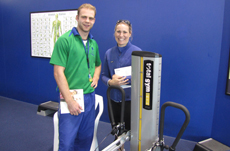

We planned my calendar to visit Melbourne, Rural Victoria, Rural South Australia and Adelaide and my team booked my schedule with appointments in these areas. People loved the concept and my schedule was booked out well in advance.

I hired a Mid-size Campervan that was fully self-sufficient and made a great portable office (and home!), as well as enabling me to stores and transport the Total Gym GTS and accessories.

From there I was off…and what a great response I received!

I loved that I could spend quality time with people and was able to demonstrate the new Total Gym GTS to owners, decision makers, trainers and even existing clients. In several locations I even took a few clients through a session, just so the owner and/or trainer could see how their client liked the Total Gym workout. In fact in one location I did two clients back to back!

While there were some cold nights (it dropped to 2.5 degrees between Warnambool and Adelaide!), there were a few extra bonuses for me.

One was that this trip spanned the Queen’s Birthday holiday and I was able to spend the Sunday and Monday in the Otway
National Park on the Great Ocean Road. What a beautiful area, I highly recommend it!

Not to mention the Twelve Apostles which are everything they say – magnificent and scenic spectacular. Another is that I saw one kangaroo and saw a number of Koalas. What a rich and beautiful country Australia is!

This was such an incredibly valuable experience. What an opportunity to visit locations that I normally wouldn’t get to see or demonstrate such as Kilmore, Vic, Sandhurst, Dandenong, Geelong and Warnambool. Not only was this hugely successful, but it was fabulous getting to spend quality time with our most important people, our customers. Being able to see some of the fitness businesses that people are involved in and seeing the brand new ventures people are setting up was wonderful.

The response from those I visited was fantastic and some are already progressing on completing their first order of Total Gym/s, which is very exciting for us, and for them!

The great news is that as a result of this trip that exceeded my expectations, we are now planning Test Drive Tours for all parts of Australia in the next year! So if you missed out on the Test Drive tour in Melbourne, Adelaide and the points between or if you would like us to come to your area – then let us know and we will aim to bring the new Total Gym GTS to YOU to have a go and test it out!

Our next region will be from Sydney to Byron Bay in 3 months.

Future Test Drive Tours:

  • Queensland
  • Adelaide
  • Western Australia
  • Victoria
  • Tasmania

To jump on our next Test Drive Tour Australia – email admin@hqh.com, use our ‘Contact Us’ online form, or phone 1800 552 878.

If you are based in New Zealand and want to check out the new Total Gym GTS, then contact Kerry our National Sales Manager on totalgym@hqh.com or phone 0800 552 8789.

Greg Doherty
Greg is the CEO and Director of HQH Fitness. As a business owner, C.H.E.K Level 3 and CHEK Holistic Lifestyle Coach Level 3, Greg has worked with thousands of businesses and fitness professionals over the past 16 years  and understands the various needs of a business. Having successfully built up the CHEK program in Australia, he is now focused on bringing the benefits of Total Gym to Australia on a larger scale.
gregd@hqh.com